




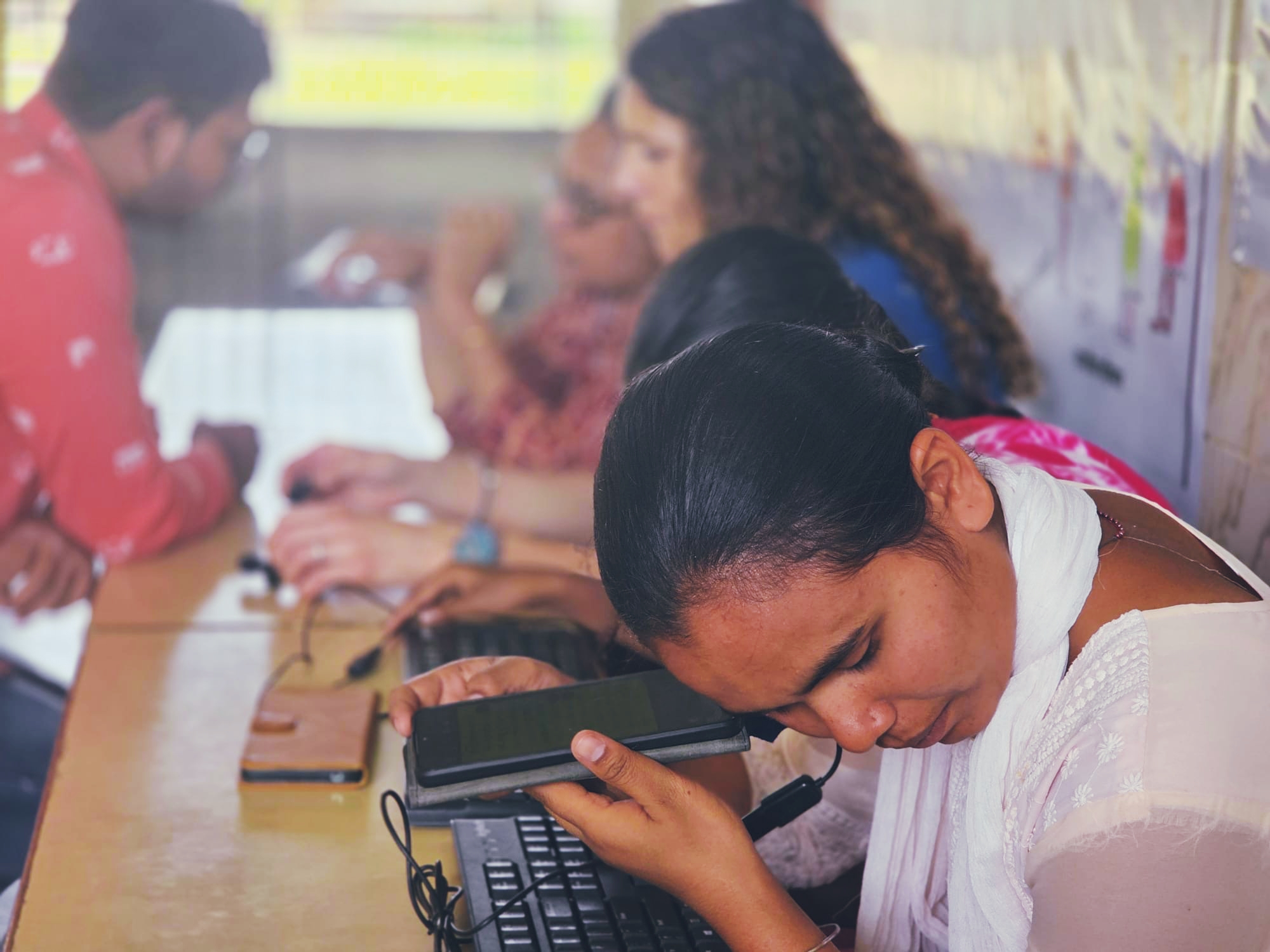
19 Mar Technology, Inclusion and Empowerment: A New Step Forward for Visually Impaired Children
A meaningful breakthrough has recently taken place for the visually impaired children we support—and it truly impressed us.
AI-powered smart glasses have been introduced for the students.
Watching them use these glasses, we were struck by how intuitive and precise this tool is.
With real-time audio feedback, the children can recognize objects, better understand their surroundings, describe scenes, and even read text.
What once required constant assistance can now be done independently.
This technology marks a concrete and important step toward greater autonomy, both in learning and in everyday life.
It is a valuable tool that allows them to access education with more confidence and freedom.
Digitizing to Better Include
The introduction of these glasses is part of a broader approach: the digitalization of learning.
Adapted digital equipment, audio materials, and specialized educational tools—each technological advancement is designed as a lever for equality.
The goal is simple: to ensure that disability is no longer a barrier to learning.
But technology alone is not enough.
Inclusion is also built through teachers.
We invest in training educators in inclusive education: adapting materials, adjusting methods, and understanding the specific needs of visually impaired students.
In our center, a visually impaired teacher teaches the children himself.
He knows their reality.
He understands their challenges.
And above all, he embodies possibility.
For the students, seeing a visually impaired adult passing on knowledge sends a powerful message: their future is not limited by their disability.
Every innovation, every training, every pedagogical adaptation contributes to the same ambition: to provide visually impaired children with equitable access to education and to support them toward lasting independence.
Step by step, we are building an environment where disability no longer defines limits.